Research + Design Advanced Studio


Loaf Row Homes

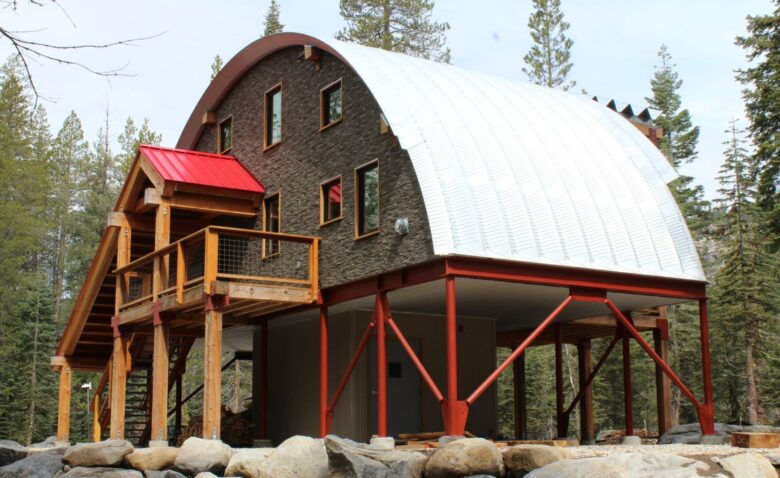
Quonset Huts



Material & Site Analysis -Development Plan

The site contains three main upland soils — Mardin (MdC), Erie (ErB), and Hoosic (HoD) — surrounding a central wetland basin. Each soil expresses distinct textural and hydrological behavior that informs how it can be used structurally and ecologically.
Mardin gravelly silt loam (MdC)
-
Found on the northern ridge; moderately drained, fine-grained, and cohesive.
-
Works well as earthbag wall fill when mixed with 20–40% sand or gravel and stabilized with lime.
-
Requires gravel trench foundations due to its shallow fragipan and limited permeability.
-
Serves as the site’s most suitable structural soil, providing both strength and local material identity.
Erie gravelly/channery silt loam (ErB)
-
Occupies the flatter terraces bordering the wetland.
-
Somewhat poorly drained with a shallow water table.
-
Lacks cohesion for wall fill but performs well for parking areas, access routes, and biofilter zones.
-
Benefits from permeable surfacing and mild grading to prevent standing water.
Hoosic gravelly sandy loam (HoD)
-
Found on the southern slope and terrace; coarse, deep, and highly permeable.
-
Too loose for earthbag fill but ideal for foundations, subgrade, and drainage layers.
-
Provides a natural source of aggregate to blend with finer Mardin and Erie soils.
Wetland Basin
-
Located at the center of the site, consisting of saturated silty and organic deposits.
-
Structurally weak but ecologically vital — functions as a biofilter and stormwater retention area.

The land reads as a living section—two ridges enclosing a wet heart. The northern and southern slopes rise above a central wetland that naturally gathers, filters, and releases water. This form encourages a planning approach rooted in topography and flow rather than imposed geometry. Housing aligns with the higher, drier ridges where the ground is cohesive and stable. The flatter middle benches become shared surfaces—parking, paths, and gathering zones—where permeability replaces solidity. The wetland itself remains open, serving as both landscape and infrastructure: a working ecological filter at the center of the settlement.
By allowing the natural movement of water and the character of soils to guide arrangement, the masterplan grows organically from its material base. Built form, circulation, and vegetation all respond to the same gradient—from structure to absorption—creating a site that performs as a continuous ecological and spatial system.


Construction Detail References
Housing Deign


