Research + Design Advanced Studio
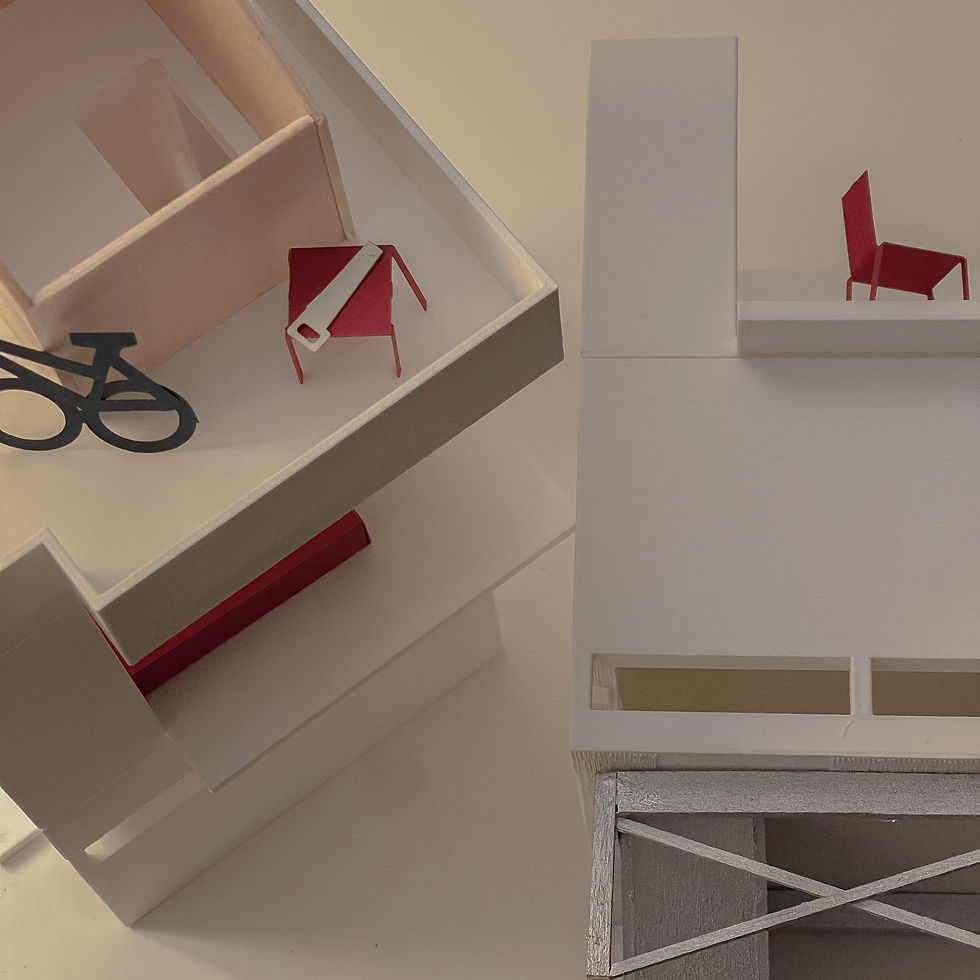

Minimum footprint
This project stems from research on the relationship between farmland, crop cultivation, and housing, which revealed that housing consistently sustained the least square footage within rural farming contexts. In planning for new housing development, we sought to build upon these findings by exploring the possibility of leaving more land for agricultural use rather than residential footprint.


Through an analysis of square footage distribution across programmatic spaces, ranging from studio apartments to single-family homes, we developed the Minimum Footprint Home, a vertical four-story residential tower specifically designed for the farmworker. Each floor is strategically programmed with essential spaces: a mudroom, kitchen, bathroom, and resting area, minimizing land occupation while maximizing livability. Elevated on stilts, the tower hovers lightly above the terrain, preserving the farmland below while creating a home that embodies efficiency, resilience, and respect for its agricultural context.
Diagrams
Form_ This axonometric diagram illustrates the tower organized around a 12' x 12' modular grid. To prioritize key programmatic zones, specifically the kitchen and bedroom, two volumes are strategically shifted outward by 3' x 3'. These subtle extrusions enhance spatial usability while maintaining the integrity of the original grid logic.

Program_ This sectional drawing illustrates a four-story structure organized by distinct functional zones, each tailored to support the daily rhythms of farm life. The building is vertically stratified into four programmatic categories. Each floor is programmatically distinct yet spatially connected, forming a vertical sequence that mirrors the physical and emotional needs of daily labor.

Circulation_ This drawing illustrates a compact vertical circulation system designed to optimize spatial efficiency across multiple floors. The stairs alternate orientation at each level, allowing layouts to shift and adapt while maintaining a consistent structural rhythm. The stair itself is a high-incline configuration, selected to minimize its footprint while preserving functionality.

Click On The Image
Drawings

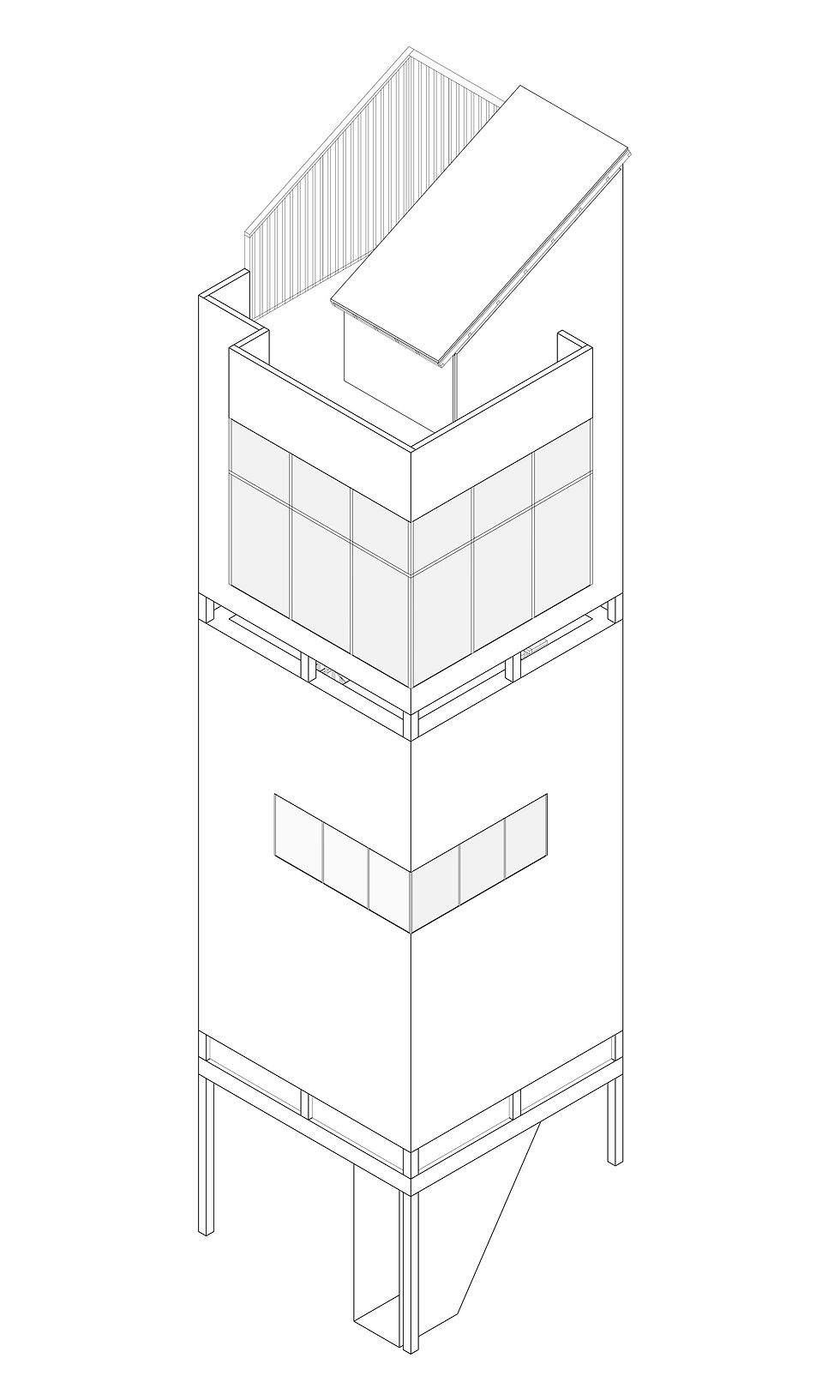
ELEVATION + SECTION
Click On The Image

Fourth Floor | Rest

The day finishes in the bed/living room, a combined area for sleeping and living.
Third Floor | Cleanse
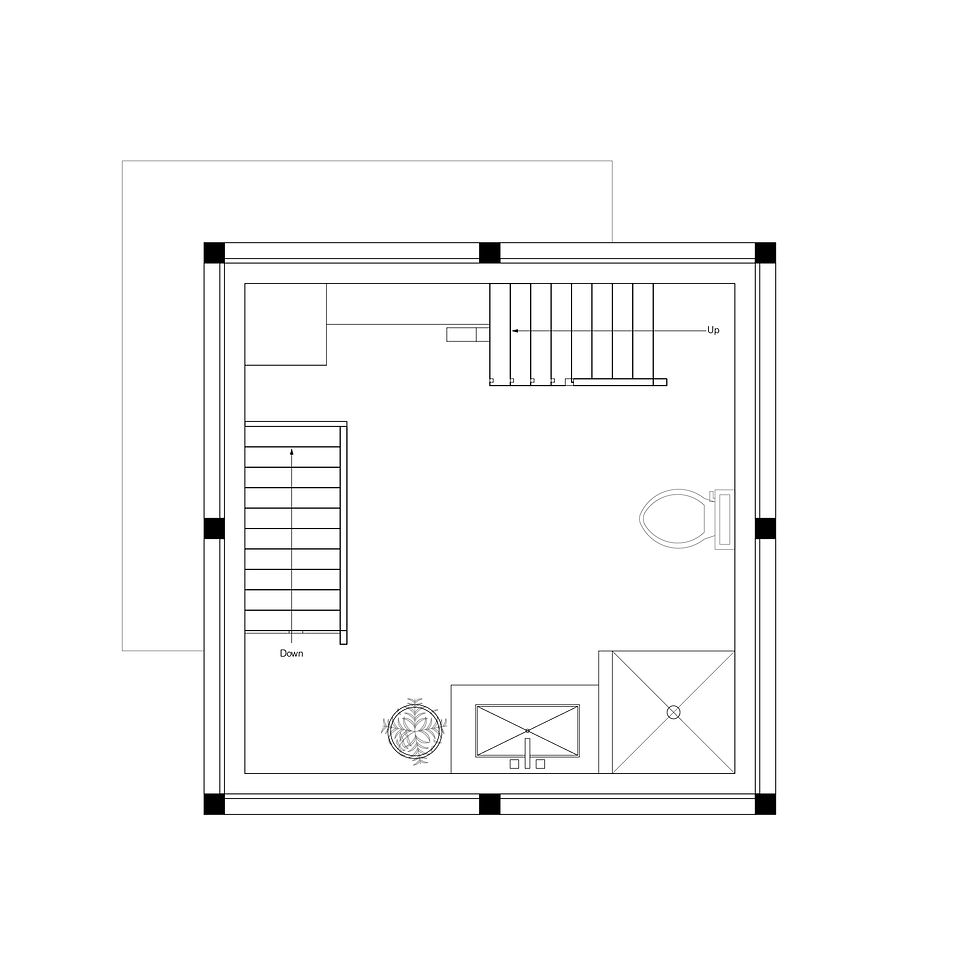
The bathroom offers a space to shower and clean up before resting.

Second Floor | Fuel

They move into the kitchen, where a glass of water and a quick snack provide refreshment.
First Floor | Unload

At the end of the day, the farmworker enters the mudroom to leave behind boots, clothes, and tools.
This sequence not only reflects the rhythm of the farmworker’s routine but also reinforces the project’s intent: to preserve land for cultivation while providing a dignified, efficient home that meets the essential needs of daily life.
Building the Mini

