Is Incremental Housing a Good Approach for Farmworker Housing?
- Kanika Bhagat

- Sep 29, 2025
- 2 min read
09/23/2025
Our research into farmworkers and the housing options available to them led us to a core provocation:
How can designers turn “good enough” into “good for everyone,” delivering sustainable, low-cost farmworker housing that measurably improves health, privacy, and dignity at the scale we need?
That raised a twin challenge: build dignified spaces for farmworkers while addressing costs so farm owners can actually build them. Incremental housing, the idea to build a safe, complete core and housing modules now and expand later, looked like a pragmatic way to meet both goals.
What we mean by “incremental”
We’re inspired by precedents like Elemental’s Quinta Monroy and Tatiana Bilbao’s Ocoyoacac Minimum Housing. Their lesson is to deliver a robust scaffold of structure, services, and safety which:
gives residents agency to customize and expand,
lets owners phase investment instead of paying for everything up front, and
maintains baseline quality so early phases aren’t substandard.
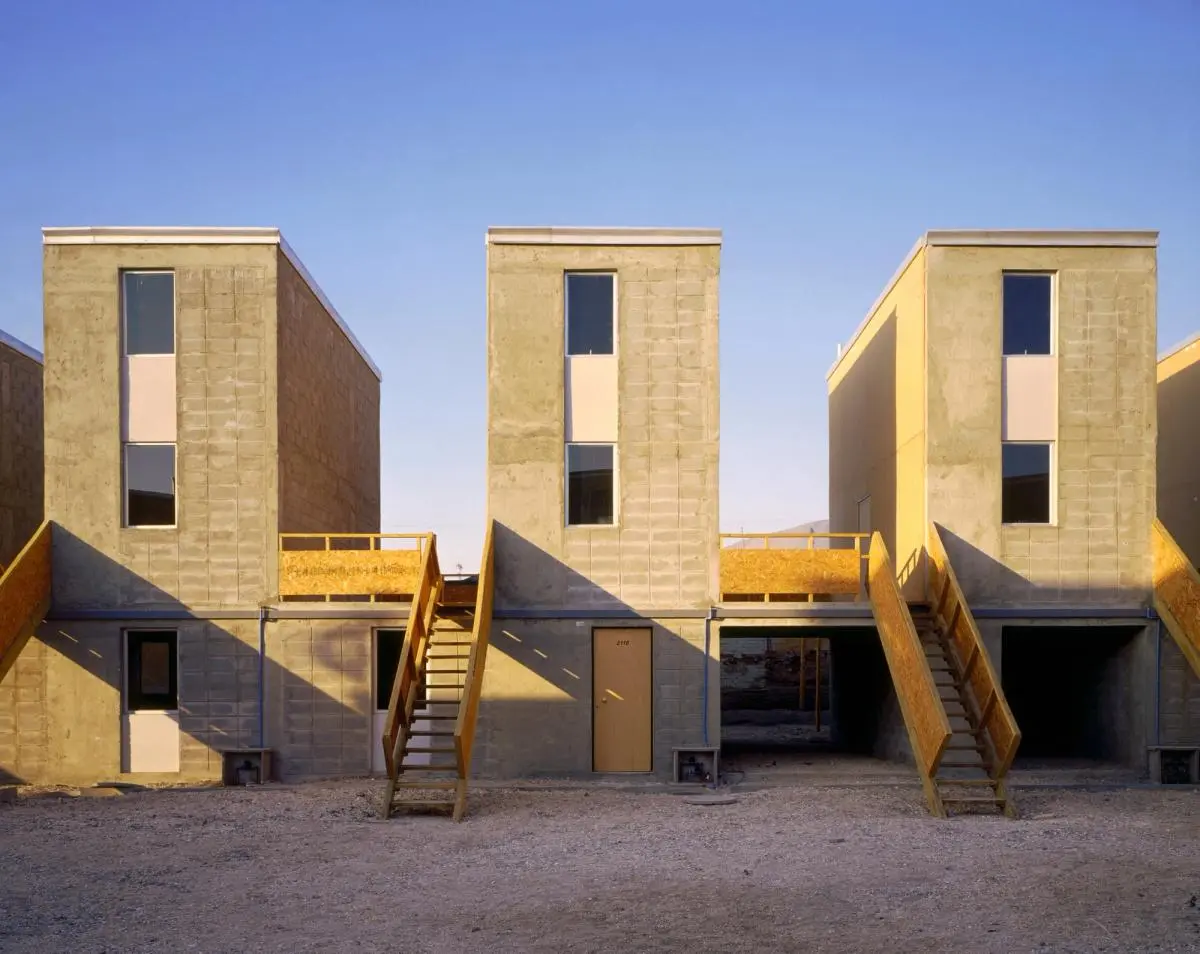
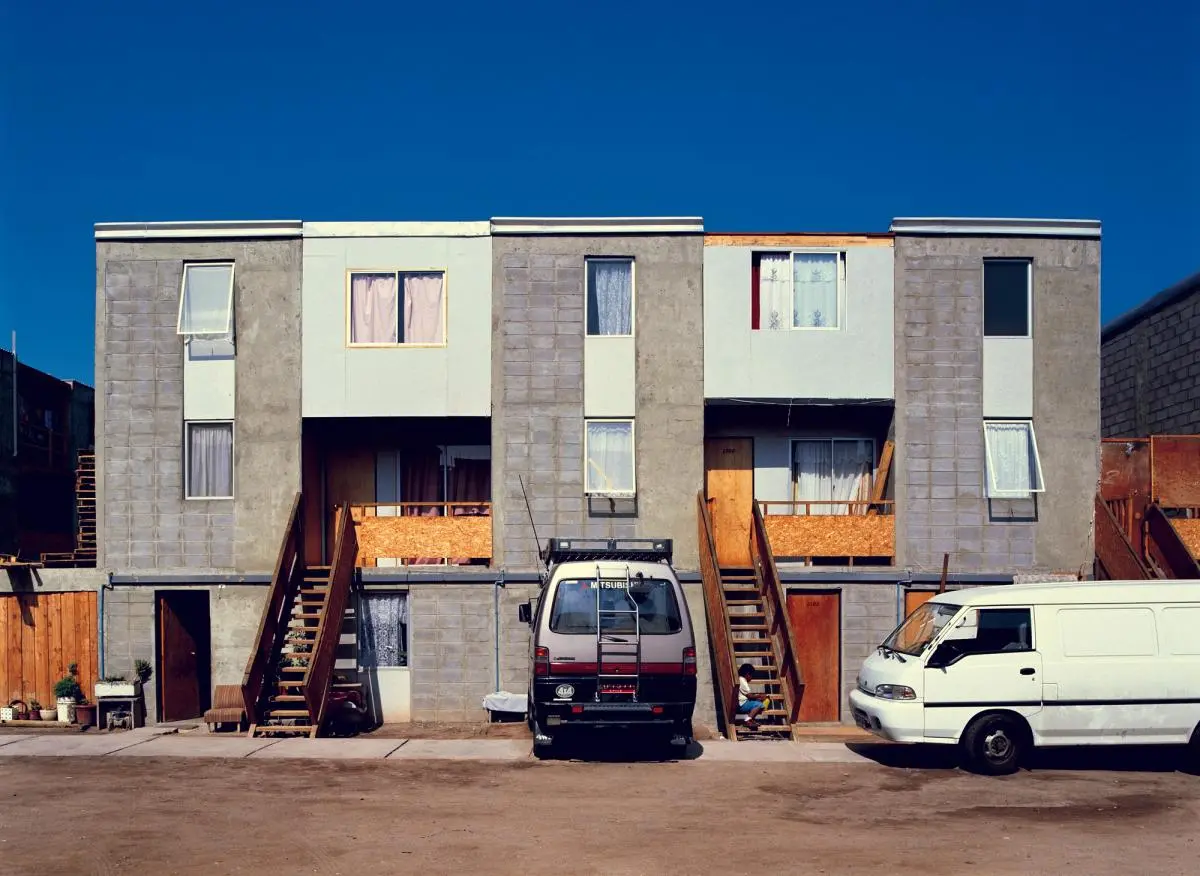
Quinta Monroy Housing (Elemental, Iquique, 2004): a “half-a-good-house” starter core with structure, services, and clear expansion bays giving families agency to complete and grow their homes over time while keeping phase-one costs low.
For farmworker housing, that means a core-and-shell strategy. Think of it as a solid starter “core” that holds the stairs and "wet spaces" as bathrooms and kitchens share the same plumbing spine. The bedrooms and public spaces could expand incrementally as needed.


Tatiana Bilbao, Ocoyoacac Minimum Housing (2017): an expandable starter home organized around a compact service core (kitchen/bath) and a generous flexible space, inviting families to add rooms over time and tailor the house to their needs and budget.
09/26/2025
Our first concept: dignity-first modules around a shared core
We began with two guidelines:
Privacy + dignity: every farmworker gets an individual bedroom; bathrooms shared by three people max.
Affordability: smaller initial rooms to reduce phase-one cost.
We grouped three bedrooms + one bath into a private module and connected three modules to a central circulatory core which acted as a threshold between private rooms and shared kitchen/living. The core had:
a skylight for daylight,
seating and lockers for tools/clean clothes,
an entry porch with a wash-down zone (boots, gear) to keep interiors clean.
This produced a pinwheel plan with potential vertical expansion (second floor) once funding or household needs grew.


What didn’t work (and why)
Modeling exposed real limitations:
Inefficient core: the stair dominated the center, choking daylight and eating usable area.
Weak environmental response: the pinwheel threw windows in all directions, ignoring solar gain, summertime shading, and prevailing winds.
Undersized commons: kitchens and living areas felt tight, undermining community life.
Bedroom squeeze: even with closets and under-bed storage for seasonal workers, rooms felt too small in practice.

Comments